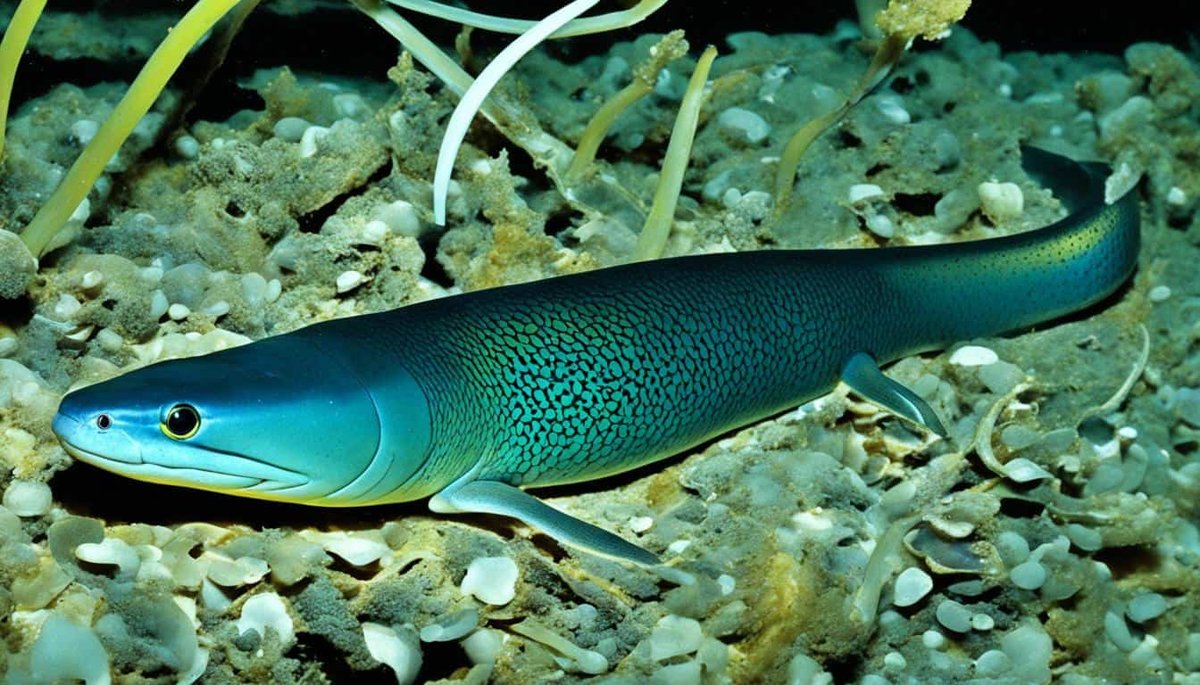
For centuries, the electric eel has captivated scientists and laypeople alike, a biological marvel capable of delivering shocks potent enough to stun prey and deter predators. This serpentine enigma, often thought of as a single, unique species, holds a far more intricate story. Recent scientific discoveries have dramatically reshaped our understanding of this iconic creature, revealing a fascinating evolutionary history and a surprising diversity: the single species we once knew has now been officially reclassified into three distinct species. This deep dive will unravel the true complexity of these remarkable fish, from their ancient lineage to their incredible adaptations and the profound impact they've had on scientific discovery.
At a Glance: Key Takeaways on Electric Eel Diversity
- Not True Eels: Despite their name, electric eels are actually a type of knifefish, more closely related to catfish than to marine eels.
- Three Species Now: Until 2019, Electrophorus electricus was considered the sole species. Research now recognizes three: E. electricus, E. voltai, and E. varii.
- Record Breakers: E. voltai is the most powerful bioelectricity generator known, capable of delivering shocks up to 860 volts.
- Ancient Divergence: The species began to diverge millions of years ago, with E. varii splitting off around 7.1 million years ago, and E. electricus and E. voltai separating approximately 3.6 million years ago.
- Unique Habitats: Each species occupies largely non-overlapping regions within northern South America, preferring either upland or lowland freshwater environments.
- Bio-Inspired Innovation: The electric eel's unique ability to generate electricity has inspired the invention of the electric battery and continues to drive research into medical implants and flexible electronics.
Unmasking a Hidden Diversity: More Than Just One Electric Eel
For over 250 years, the scientific community primarily recognized a single species of electric eel: Electrophorus electricus. Found across the vast freshwater systems of South America, this creature was an anomaly, a living battery that defied easy categorization. However, the sheer breadth of its geographic range, coupled with subtle variations observed by field biologists, hinted at a deeper story.
In 2019, groundbreaking research confirmed these suspicions. Through comprehensive morphological, genetic, and ecological analyses, scientists officially divided the genus Electrophorus into three distinct species: Electrophorus electricus, Electrophorus voltai, and Electrophorus varii. This reclassification wasn't just a taxonomic update; it represented a crucial leap in understanding the true evolutionary history and diversity of electric eels. It highlighted how convergent evolution, adapting to diverse environments, could lead to species that look remarkably similar on the surface but possess unique genetic blueprints and ecological niches.
Not Your Average Eel: Their Place in the Tree of Life
One of the most common misconceptions about electric eels is that they are, in fact, eels. Their serpentine bodies and common name certainly suggest it. Yet, this is a classic case of convergent evolution in body shape. Genetically and phylogenetically, electric eels are far removed from the true eels (order Anguilliformes) found in marine and some freshwater environments.
Instead, Electrophorus species belong to the family Gymnotidae, part of the order Gymnotiformes. This order encompasses the diverse group of neotropical freshwater fish known as knifefish, many of which are also electroreceptive. Their closest relatives are actually catfish, placing them firmly within the diverse lineage of Ostariophysi, a superorder of ray-finned fish. This unique evolutionary position underscores their distinct path in developing their legendary electrical capabilities, separate from other "electric fish" found globally.
An Ancient Spark: The Evolutionary Timeline of Electrophorus
The divergence of the three Electrophorus species paints a vivid picture of adaptation driven by geological and environmental changes across South America. The Amazon basin, with its fluctuating waterways and diverse habitats, served as the crucible for this evolutionary branching.
The earliest split occurred approximately 7.1 million years ago, when E. varii diverged from the common ancestor of E. electricus and E. voltai. This ancient lineage settled primarily in the lowland waters, specifically the murky, sediment-rich river bottoms and swamps of the Amazon Basin.
Millions of years later, around 3.6 million years ago, the ancestor of E. electricus and E. voltai further diversified. These two species subsequently adapted to upland habitats. E. electricus typically inhabits the Shield uplands, areas characterized by older, more stable geological formations. Meanwhile, E. voltai, the record-breaking voltage generator, is found in the Brazilian Shield region, often in clear, faster-flowing waters that might require even greater electrical output to stun prey effectively. These largely non-overlapping distributions across northern South America are critical to their identification and understanding their ecological roles.
Meeting the Species: E. electricus, E. voltai, and E. varii
While all three species share the distinctive long, stout, scaleless body, subtle differences in their morphology, habitat, and electrical output distinguish them.
- Electrophorus electricus: This is the species that was historically recognized as the only electric eel. It's typically found north of the Amazon River, inhabiting upland rivers and streams of the Guiana Shield. While still incredibly powerful, generating significant voltage, it is no longer considered the absolute strongest. Adults can reach impressive sizes, up to 2 meters (6 ft 7 in) and 20 kg (44 lb).
- Electrophorus voltai: Named in honor of Alessandro Volta, the inventor of the electric battery, this species lives up to its namesake. E. voltai holds the record for the strongest known bioelectricity generator, capable of delivering a staggering 860 volts. It inhabits the Brazilian Shield uplands, favoring clear, often cooler, fast-flowing waters. Its superior voltage generation might be an adaptation to the higher resistance of these less turbid environments or to hunting larger, more resilient prey.
- Electrophorus varii: Named after the Brazilian ichthyologist Richard P. Vari, this species generally occupies the lowland turbid waters of the Amazon basin, including rivers like the Rio Xingu. While also powerful, its maximum voltage is typically lower than that of E. voltai. There is ongoing scientific discussion that E. varii might be a junior synonym of another previously described species, E. multivalvulus, highlighting the dynamic nature of taxonomic research.
Life in the Muddy Waters: Adaptations and Lifestyle
The lives of electric eels are a masterclass in adaptation to their challenging freshwater environments. Primarily nocturnal, these creatures navigate their murky habitats with an array of specialized senses, compensating for their notably poor vision.
- Obligate Air-Breathers: One of their most critical adaptations is the ability to breathe air. Electric eels are obligate air-breathing animals, meaning they must surface periodically to gulp air. They do this through buccal pumping, where their buccal cavity is lined with a frilled mucosa highly vascularized for efficient gas exchange. This adaptation allows them to thrive in oxygen-poor waters, such as stagnant swamps and muddy river bottoms, and even survive for several hours on land if their skin remains moist.
- Electrolocation and Hunting: With poor eyesight, electric eels rely heavily on electrolocation. They constantly emit low-voltage electric pulses from their Sachs' organ, creating an electric field around themselves. Distortions in this field, caused by nearby objects or prey, are detected by specialized electroreceptors, allowing them to "see" their surroundings in electrical terms. Their diet primarily consists of fish, but they will also eat amphibians and crustaceans. Interestingly, E. voltai has been observed exhibiting pack-hunting behavior, cornering prey, which is rare among electric fish.
- Growth and Reproduction: Electric eels grow throughout their lives, continuously adding vertebrae. Males tend to grow larger than females, becoming reproductively active at around 1.2 meters, while females mature at about 70 cm. Some captive specimens have remarkably lived for over 20 years. Reproduction typically occurs during the dry season, from September to December. Males meticulously build nests from their saliva, into which females deposit a large clutch of eggs, sometimes up to 1,200. The males then provide prolonged parental care for about four months, guarding the eggs and fry.
The Anatomy of a Shock: How They Generate Electricity
The electric eel's most famous attribute is, without a doubt, its ability to generate powerful electric shocks. This incredible feat of bioengineering relies on highly specialized organs that have fascinated scientists for centuries.
Electric eels possess three pairs of longitudinally arranged electric organs, all composed of modified muscle cells called electrocytes:
- Main Organ: Responsible for the highest voltage discharges, used for stunning prey and deterring predators.
- Hunter's Organ: Also contributes to high-voltage discharges, possibly generating a third, middle-voltage discharge (38.5 to 56.5 volts) for less than 2 milliseconds, potentially for internal coordination or less intense stunning.
- Sachs' Organ: This organ primarily produces low-voltage discharges (around 10V at 25 Hz) for electrolocation and communication.
The Mechanism of Discharge:
The secret to their high-voltage output lies in stacking thousands of these electrocytes in series, much like a biological battery. Each electrocyte acts as a small, biological cell. When at rest, the outer membrane of an electrocyte is polarized (positive outside, negative inside). A signal from the brain triggers the release of acetylcholine at nerve endings on one side of the electrocyte. This chemical messenger opens ion channels, primarily for sodium. Sodium ions rush into the cell, reversing its polarity (negative outside, positive inside). This rapid change creates a potential difference across the cell.
With approximately 6,000 electrocytes stacked in series within the main organ, these individual potential differences sum up, generating rapid pulses of high voltage—up to 860V for E. voltai—at several hundred hertz (up to 500 Hz). In freshwater, which has high electrical resistance, such high voltage is crucial for delivering a strong current. Peak currents can reach around 1 ampere at 500V.
For a deeper dive into this incredible biological process, you can explore Understanding how eels generate electricity.
Shocking Tactics:
Electric eels employ sophisticated strategies to maximize the effectiveness of their shocks:
- Body Coiling: To concentrate their discharge, an eel will often coil its body around its prey. This maneuver reduces the distance between the positive and negative poles of its electrical field, focusing the current directly through the victim and maximizing the shock's impact.
- Leaping Defense: In a truly astonishing defensive maneuver, electric eels can leap from the water, pressing their head and body against an attacking animal (or even a curious human). This allows them to deliver powerful, direct shocks above the water's surface, where the current is less dissipated, creating a truly deterrent effect against large predators.
Convergent Evolution: A Shared Genetic Blueprint for Electricity
The evolution of electric organs in fish is one of the most compelling examples of convergent evolution in the animal kingdom. Despite the incredible complexity of these organs, research has shown that they have evolved independently at least six times across different lineages of fish. This means that groups like electric eels (Gymnotiformes), African electric catfish (Malapteruridae), and stargazers (Uranoscopidae) all developed their electric capabilities separately, long after their last common ancestors.
What's truly remarkable is that despite these independent origins, these diverse lineages utilized a common "genetic toolbox." Scientists have identified a core set of regulatory genes and molecular pathways that are shared across different groups of electric fish. Even more fascinating, many of these genes and pathways are also involved in the development and function of other electrically active tissues, such as those that transmit electrical pulses in vertebrate hearts. This suggests that evolution, when faced with the challenge of generating electricity, repeatedly tapped into pre-existing genetic mechanisms, modifying and repurposing them to build these unique biological batteries.
From Nature's Battery to Modern Tech: The Legacy of the Electric Eel
The electric eel's ability to generate electricity has not only shaped its own evolutionary path but has also profoundly influenced human understanding of electricity and its applications. Its scientific legacy is immense:
- Pioneering Electrophysiology: As early as 1775, figures like John Hunter and Hugh Williamson conducted detailed studies on the electrical properties of the electric eel. Their work provided crucial insights into bioelectricity and significantly influenced Luigi Galvani's experiments with frog legs, laying the foundation for electrophysiology.
- The Invention of the Battery: The eel's ability to store and discharge electricity in a controlled manner directly inspired Alessandro Volta. In 1800, Volta invented the electric battery, the "voltaic pile," specifically by mimicking the stack of electrocytes he observed in the eel's organs. This invention revolutionized science and technology, powering the industrial revolution and countless modern devices.
- Humboldt and Faraday: The explorer Alexander von Humboldt famously documented indigenous fishing methods in Venezuela, where horses were used to provoke electric eels into discharging their energy before they could be caught. Later, in 1839, Michael Faraday, another titan of electrical science, conducted extensive tests on live electric eels, precisely quantifying their electrical output and confirming their biological nature.
Today, the electric eel continues to inspire innovation: - Bio-Inspired Power Sources: Scientists are developing artificial electrocytes that mimic the eel's natural electrical behavior. These synthetic cells show immense potential as flexible, biocompatible power sources for medical implants, such as retinal prostheses, pacemakers, and other microscopic bionic devices. Imagine a future where your medical device is powered by a miniature, biological-inspired battery that generates electricity from your own body fluids.
- Wearable Electronics: Beyond medicine, flexible electrochemical capacitors are being designed based on the eel's organ structure. These could lead to advancements in wearable electronics, allowing devices to be seamlessly integrated into clothing or even directly on the skin, powered by efficient, bio-inspired energy solutions.
Dispelling Myths: Common Questions About Electric Eels
Given their incredible capabilities, electric eels are often surrounded by misconceptions. Let's clear up a few:
- Are electric eels dangerous to humans? While an electric eel's shock can be extremely painful, capable of knocking an adult human off their feet or causing muscle paralysis and respiratory issues, it's rarely fatal on its own. The primary danger comes from secondary effects, such as drowning if stunned in water. They typically only shock when threatened or hunting.
- Can they 'run out' of electricity? Not entirely. Electric eels can deplete their immediate electrical charge after repeated, powerful shocks, requiring a recovery period to re-polarize their electrocytes. However, they continuously generate low-voltage electricity for navigation and can quickly recharge for high-voltage discharges as needed. It's more akin to draining a battery that slowly recharges, rather than running out permanently.
- Do electric eels shock themselves? No, electric eels are immune to their own shocks. Their nervous systems and musculature are designed to withstand the electrical pulses they generate, protecting their vital organs from damage.
- How do they generate electricity without a battery? They don't have a conventional battery. Their "battery" is biological, made up of thousands of specialized cells called electrocytes that act like tiny, individual biological batteries wired in series. When triggered, these cells simultaneously discharge, creating a cumulative high voltage.
Looking Ahead: The Future of Electric Eel Research and Conservation
The reclassification of Electrophorus into three species has opened exciting new avenues for research. Scientists are now better equipped to study the subtle differences in their ecology, physiology, and electrical adaptations. Understanding how each species has carved out its unique niche in the vast South American waterways provides invaluable insights into speciation and adaptation.
Beyond basic biology, the electric eel remains a powerful muse for biomimicry. Continued research into the precise mechanisms of their electric organs promises to unlock new methods for sustainable energy generation, flexible electronics, and advanced medical technologies.
However, like many species in the Amazon basin, electric eels face increasing threats from habitat degradation, pollution, and climate change. Protecting these vital freshwater ecosystems is paramount not only for the survival of these unique creatures but also for the continued inspiration they provide to human innovation. The more we learn about the evolutionary history and diversity of electric eels, the better equipped we are to appreciate, understand, and protect these living wonders of the natural world.