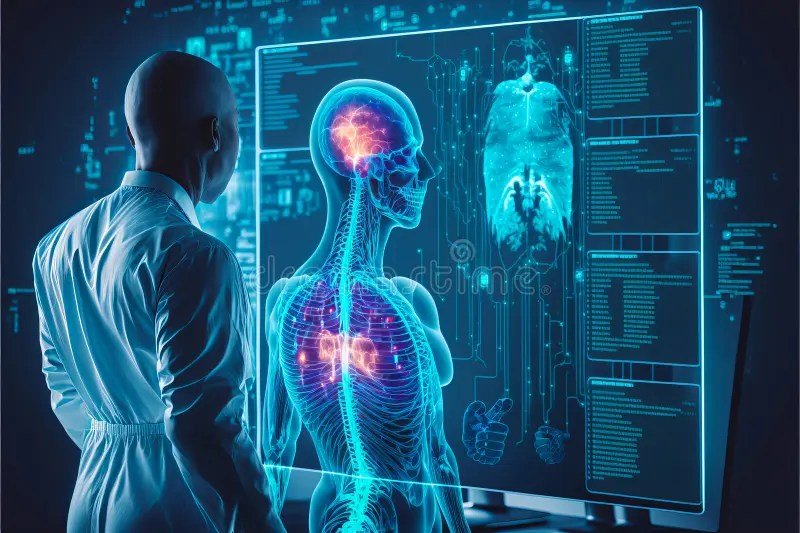
Imagine a future where traffic accidents are a rarity, where commutes are not just efficient but inherently safer, and where vehicles anticipate risks with uncanny precision. This isn't science fiction; it's the profound promise of bio-inspired technology, especially as it revolutionizes autonomous driving. By mimicking the sophisticated mechanisms of living organisms, from our own human brains to the sensory prowess of the animal kingdom, engineers are creating self-driving systems designed for unparalleled safety. It's about building trust not just in the technology, but in a fundamentally new way of interacting with our world.
This isn't merely about slapping a "smart" label on a car; it's about deeply embedding principles of adaptation, perception, and decision-making that have been perfected over millennia of evolution. When we talk about bio-inspired technology and human safety in the context of autonomous vehicles, we're talking about a paradigm shift where the road ahead is navigated with an intelligence modeled on life itself.
At a Glance: Bio-Inspired Safety in AVs
- Mimicking Life: Autonomous systems are designed to emulate the perception, decision-making, and proactive responses of skilled human drivers and biological organisms.
- Advanced Perception: Multi-camera setups provide a 360-degree, real-time view, acting as digital "eyes" to map surroundings, identify objects, and assess risks far beyond human capability.
- AI as the Brain: Neural networks power sophisticated motion planning, processing vast amounts of data at speeds (e.g., 254 TOPS on NVIDIA DRIVE Orin™ SoC) that vastly exceed the human brain's conscious processing.
- Proactive Risk Mitigation: Systems go beyond basic compliance, constantly monitoring conditions and adapting behaviors to prioritize the well-being of passengers, pedestrians, and other road users.
- Cognitive Safety Features: Applications like OverWatch™ add layers of intelligence to assist vulnerable drivers, ensure traffic law adherence, and enhance pedestrian protection.
- Continuous Learning: Autonomous platforms refine their algorithms through supervised learning and real-world data, achieving milestones like NCAP ratings for autonomous public transport.
- Transparency Builds Trust: Open communication with regulators, partners, and the public is crucial for widespread adoption and building confidence in this transformative technology.
The Unseen Driver: Why Human-Mimicry Matters for Safety
For decades, the dream of self-driving cars was a distant one, primarily because simulating the complex, intuitive, and often spontaneous decisions of a human driver proved incredibly challenging. Traditional AI, while excellent at structured tasks, often stumbled when faced with the inherent unpredictability of the real world—a child darting into the street, a sudden downpour obscuring visibility, or another driver's aggressive maneuver.
This is where bio-inspired technology steps in. Instead of trying to program every conceivable rule, this approach aims to build systems that learn, adapt, and react much like a living organism. Think about how easily a human driver spots a potential hazard, assesses its risk, and instantly adjusts their speed or trajectory. This isn't just about following rules; it's about context, anticipation, and an almost subconscious understanding of the environment.
The inherent safety mechanisms found in biological systems—our capacity for rapid perception, sophisticated risk assessment, and continuous adaptation—offer a powerful blueprint. Bio-inspired technology isn't just "like" nature; it actively leverages these proven survival strategies to create autonomous vehicles that aren't just intelligent, but intrinsically safe. It's about designing a digital "driver" that, at its core, understands how to navigate the messy, dynamic world with the same robust resilience we find in life itself.
Eyes Wide Open: How AVs "See" with Bio-Inspired Perception
For an autonomous vehicle to be safe, it first needs to "see" its world with an accuracy and breadth that surpasses human vision. This is where bio-inspired perception systems truly shine. Imagine the multitude of information your eyes take in every second—colors, shapes, distances, movements, and subtle cues that signal intent or danger. Autonomous systems are designed to replicate this, but with a superhuman edge.
At the heart of this capability are multiple cameras, strategically placed around the vehicle. These aren't just simple dashboard cams; they function as the vehicle's "eyes," providing a seamless 360-degree view for hundreds of meters—up to 300 meters, for instance, in some leading systems. This comprehensive visual input is processed in real time, creating a detailed, dynamic map of the surroundings.
This isn't just about detecting a car or a pedestrian; it's about much more granular detail. The system can:
- Identify and Classify Objects: Discern between stationary objects (like a parked car or a road sign) and moving ones (a cyclist, an animal), and classify them with high confidence.
- Assess Road Conditions: Recognize slick surfaces, potholes, debris, or changing lane markings, and understand their implications for driving.
- Evaluate Risks: Continuously analyze the trajectory and speed of other objects to predict potential conflicts, calculating probabilities of collision and identifying optimal avoidance paths.
This process mirrors how our own brains integrate visual information from two eyes, along with peripheral vision, to build a rich, predictive model of our immediate environment. The bio-inspired approach enhances this by eliminating blind spots, ensuring consistent vigilance, and operating effectively even in conditions that might challenge a human driver.
The Brain of the Machine: AI for Adaptive Decision-Making
Once an autonomous vehicle "sees" its environment, the next critical step for safety is intelligent decision-making. This is where Artificial Intelligence, specifically in the form of neural networks, comes into play, mimicking the brain's cortex for advanced motion planning. Just as our brains process sensory input to decide on the next action—whether to accelerate, brake, or change lanes—these AI systems perform millions of calculations per second to navigate complex scenarios.
Consider the immense computing power required. Modern automotive-grade systems, like the NVIDIA DRIVE Orin™ SoC, can perform approximately 254 TOPS (Tera Operations Per Second). To put that into perspective, this processing capability allows the system to analyze and respond to information far beyond the capabilities of the human brain's conscious thought. It can simultaneously track dozens of objects, predict their movements, and evaluate countless potential reactions in milliseconds.
The challenges here are immense: how does an AV decide to swerve to avoid an obstacle while also ensuring it doesn't cause another accident? How does it interpret subtle signals from other drivers or pedestrians? Bio-inspired AI tackles this by learning from vast datasets of real-world driving scenarios, identifying patterns, and developing adaptive strategies. It's about building a "brain" that doesn't just follow rules but understands the nuances of traffic, pedestrian behavior, and unpredictable events.
This level of complex, real-time processing ensures that the vehicle doesn't just react, but anticipates. Much like a skilled driver might intuitively know when a pedestrian is about to step off a curb, the AI learns to infer intent and predict movements, making proactive adjustments to maintain safety. This remarkable capacity for intelligent prediction and instantaneous reaction is critical, as even biological systems, with all their evolutionary advantages, need to manage energy and information efficiently to survive. Understanding how electric eels generate power or how birds navigate complex flight paths offers insights into the efficiency of natural intelligence, a principle mirrored in the optimized algorithms of advanced AVs.
Beyond the Basics: Proactive Safety That Anticipates Risk
Simply meeting regulatory standards isn't enough when human lives are on the line. The leading edge of bio-inspired autonomous driving safety goes beyond compliance, focusing on proactive measures that anticipate and mitigate potential risks before they escalate. This means designing systems that are constantly thinking several steps ahead.
These advanced features include:
- Real-Time Monitoring: The software never stops observing. It constantly monitors road conditions, traffic flow, weather changes, and the behavior of all road users. This continuous vigilance ensures that the system is always working with the most up-to-date information.
- Intelligent Decision-Making Algorithms: Instead of fixed rules, these algorithms adapt. If road conditions suddenly deteriorate due to heavy rain or ice, the system intelligently adjusts speed, following distance, and braking parameters. This adaptive capability mimics a human's judgment in changing environments, but with greater consistency and precision.
- Prioritizing Well-being: At its core, the system's decision-making hierarchy prioritizes the safety and well-being of all involved: passengers inside the autonomous vehicle, pedestrians, cyclists, and occupants of other vehicles. This ethical framework is hard-coded into the AI, ensuring that safety is always the paramount concern.
Case Study: Imagry's OverWatch™ Feature for Enhanced Cognitive Safety
A prime example of proactive, bio-inspired safety is Imagry's safe driver OverWatch™. This innovative application extends the vehicle's "cognition" by acting as an intelligent co-pilot, designed specifically to assist drivers who might be vulnerable or distracted.
Consider the young, inexperienced driver, an elderly individual whose reflexes might be slower, or someone who is fatigued or momentarily distracted by a phone call. OverWatch™ provides an extra layer of cognitive safety by:
- Ensuring Adherence to Traffic Laws: It actively monitors speed limits, lane discipline, and other regulations, gently intervening or warning the driver if deviations occur.
- Responsiveness to Traffic Signals: It ensures that traffic lights, stop signs, and other signals are correctly interpreted and obeyed, preventing costly and dangerous mistakes.
- Prioritizing Pedestrian Safety: With advanced perception, it maintains heightened awareness of pedestrians, especially in busy urban environments, and can take corrective action if a pedestrian is at risk.
OverWatch™ adds an "extra layer of cognition" to the vehicle's decision-making process, essentially providing the wisdom and vigilance of an experienced, non-fatigued driver at all times. This kind of feature underscores how bio-inspired technology isn't just about full autonomy, but also about enhancing human driving abilities, making the transition to safer roads a collaborative journey.
The Relentless Pursuit of Perfection: Continuous Improvement in AV Safety
Autonomous driving technology isn't a static product; it's a continuously evolving system. Much like biological learning, where organisms refine their behaviors through experience and feedback, bio-inspired AVs undergo a relentless process of improvement to enhance safety. This commitment to continuous refinement is fundamental to achieving truly reliable autonomous mobility.
This ongoing evolution involves several key components:
- Supervised Learning Techniques: Engineers feed vast amounts of real-world driving data—captured from test vehicles in diverse conditions—into the AI. Human annotators meticulously label objects, behaviors, and scenarios within this data. The AI then "learns" from these examples, adjusting its neural networks to improve its perception, prediction, and decision-making capabilities. This iterative process allows the system to generalize from specific instances, making it more robust in unforeseen situations.
- Proprietary Annotation Tools: To handle the sheer volume and complexity of data, companies develop specialized tools. These tools allow for efficient and accurate labeling of everything from road signs and traffic lights to subtle human gestures and complex weather phenomena. The quality of this annotated data directly impacts the AI's learning efficacy and, consequently, the vehicle's safety performance.
- Rigorous Ongoing Evaluations: Safety is never a "set it and forget it" proposition. Autonomous systems undergo continuous testing, both in simulated environments and on public roads, under a wide range of conditions. This includes challenging edge cases and deliberately complex scenarios designed to push the system's limits.
This dedication to safety and continuous improvement leads to significant milestones. For example, some autonomous buses have achieved the NCAP rating (Euro NCAP), which is typically reserved for passenger cars and light commercial vehicles, signifying a very high standard of safety through rigorous crash testing and safety assistance system evaluations. An autonomous bus achieving such a rating is a testament to the robustness and reliability of its bio-inspired safety systems. It underscores that these vehicles aren't just "good enough," but are engineered to meet and even exceed the highest benchmarks for safety in the transportation industry. It's akin to a "learning driver" constantly honing their skills, but at an exponential pace and with tireless dedication.
Building Trust: Transparency, Accountability, and Industry Leadership
For bio-inspired autonomous driving to achieve its full potential in enhancing human safety, trust is paramount. This trust isn't automatically granted; it must be earned through consistent performance, clear communication, and unwavering accountability. Without public confidence, even the safest technology will struggle for widespread adoption.
This commitment to transparency and accountability manifests in several ways:
- Open Communication with Regulators: Autonomous vehicle developers work closely with governmental bodies and regulatory agencies. This involves sharing data, explaining technological approaches, and collaborating on the development of safety standards and frameworks. Open dialogue ensures that regulations keep pace with technological advancements while safeguarding public interest.
- Engaging with Partners: Collaborating with industry partners—from sensor manufacturers to software providers and city planners—is crucial. This ecosystem approach fosters shared knowledge, standardizes best practices, and accelerates the development of safer, more integrated solutions.
- Public Education and Engagement: Demystifying autonomous technology for the general public is vital. This involves explaining how the systems work, addressing concerns, and highlighting the safety benefits in understandable terms. Organizations like PAVE (Partners for Public Vehicle Education) play a critical role in this, working to increase public understanding and acceptance of automated vehicles. By providing clear, accessible information, they help build a bridge between complex technology and everyday citizens.
Establishing a reputation as a trusted industry leader in autonomous driving is not just about technological prowess; it's about a holistic commitment to safety that extends to every stakeholder. This dedication ensures that as autonomous mobility transforms the future of transportation, it does so with a foundation of trust, making safer mobility a reality for everyone.
Common Questions & Misconceptions About Bio-Inspired AV Safety
The concept of bio-inspired autonomous vehicles, while revolutionary, often sparks legitimate questions and sometimes, misconceptions. Let's tackle some of the most frequent ones to provide clarity.
"Is it truly safer than human driving?"
This is perhaps the most fundamental question. While definitive long-term statistics are still accumulating as the technology scales, the potential for bio-inspired AVs to be significantly safer than human driving is immense. Humans are prone to fatigue, distraction, emotional responses, and impairment. Bio-inspired systems, by contrast, maintain 360-degree vigilance 24/7, react faster, process more data, and are not susceptible to these human failings. With features like proactive risk mitigation and cognitive safety assistants, these systems are engineered to prevent accidents that human error often causes. Imagry's ability to achieve NCAP ratings for autonomous buses further underscores this inherent safety focus.
"Can bio-inspired AI really handle every unforeseen scenario?"
No system, human or AI, can truly predict every single unforeseen scenario. However, bio-inspired AI, especially through continuous supervised learning, is exceptionally adept at learning from a vast array of "edge cases" and unusual situations. By mimicking biological adaptability, these systems develop a generalized understanding that allows them to respond appropriately even to novel scenarios they haven't explicitly "seen" before. It's about developing robust intelligence, not just rote memorization. They learn to reason about situations, rather than just react to pre-programmed conditions.
"What about ethical dilemmas, like choosing between two bad outcomes?"
This is a complex area often referred to as the "trolley problem" for AVs. While bio-inspired AI prioritizes safety above all, and engineers strive to avoid such scenarios entirely through predictive capabilities, the ethical programming is critical. Generally, these systems are designed with a foundational ethical framework that prioritizes the preservation of human life, with specific guidelines often developed in collaboration with ethicists, regulators, and public input. Transparency and accountability in these design choices are crucial for societal acceptance.
"Is 'bio-inspired' just marketing jargon?"
While some terms can be overused, "bio-inspired" in the context of leading autonomous driving technology is much more than marketing. It represents a fundamental engineering philosophy. It means actively studying and translating the principles of biological intelligence—perception, cognition, adaptation, learning, and self-preservation—into artificial systems. When a system uses neural networks to mimic a brain's cortex for motion planning, or multi-camera setups for 360-degree, real-time perception that rivals natural vision, it's a direct application of bio-inspiration. It's about drawing lessons from billions of years of evolution to solve contemporary engineering challenges.
The Road Ahead: What to Expect from Bio-Inspired Mobility
The journey toward fully autonomous vehicles is one of the most exciting and transformative technological endeavors of our time. Bio-inspired technology is not just a component of this journey; it's the guiding philosophy that promises to deliver the safest, most reliable, and most human-centric autonomous mobility experiences.
As this field continues to evolve, we can expect several key developments:
- Expanded Applications: While autonomous passenger cars often grab headlines, bio-inspired technology is rapidly making inroads into other vital sectors. This includes autonomous logistics for efficient supply chains, self-driving public transport systems that enhance urban mobility, and specialized vehicles for industries like agriculture and mining, all operating with increased safety and efficiency.
- Deeper Biological Integration: The convergence of biology, artificial intelligence, and advanced engineering will only deepen. Expect to see further innovations inspired by neuroscience, cognitive science, and even behavioral ecology, leading to increasingly sophisticated and nuanced autonomous decision-making.
- Seamless Human-Machine Interaction: Future bio-inspired AVs will not only be safer but also more intuitive to interact with. Their "understanding" of human behavior will allow for smoother, more natural interactions, whether as a passenger in a fully autonomous vehicle or as a driver assisted by advanced cognitive safety features.
- A New Era of Urban Planning: The widespread adoption of safer autonomous vehicles, particularly those operating with bio-inspired intelligence, has the potential to reshape urban environments. We could see reduced traffic congestion, fewer accidents, more efficient use of public space, and a healthier, more accessible urban landscape for everyone.
The future of transportation is being reimagined not by simply building faster or smarter machines, but by building machines that learn from the ultimate master of adaptation and survival: life itself. By embracing bio-inspired design, we're not just creating advanced vehicles; we're crafting a fundamentally safer, more reliable, and ultimately, more human way to move through the world. The journey has just begun, and the destination is safer roads for all.